

SDG8 Decent Work and Economic Growth
Strengthening Internship Systems to Cultivate Future Talent with Professional Teaching Skills and Workplace Competitiveness
As a leading institution for teacher education in Taiwan, NTNU has long been committed to cultivating future talent equipped with both educational professionalism and workplace competitiveness. To enhance students’ employability and practical capabilities, the University continues to advance an internship-centered framework for teaching preparation and career development.
Teaching internships form a core component of NTNU’s teacher education curriculum, providing preservice teachers with opportunities to immerse themselves in real teaching environments. Through the application of educational theories and instructional methods in classroom settings—and with guidance from professors and secondary school mentor teachers—students accumulate teaching experience, strengthen instructional skills, and progressively build professional teaching competence. In 2024, NTNU offered 79 teaching internship courses with a total enrollment of 1,404 students.
Beyond the field of education, NTNU also actively promotes industry internships, offering students a diverse range of experiential learning opportunities to broaden their career pathways. The Career Development Center implements the “Enhanced Industry Internship Subsidy Program,” which supports departments in offering internship courses aligned with industry trends and needs. Over the past three years, 42 departments have developed and institutionalized industry internship courses, enabling students to apply their disciplinary knowledge in businesses, communities, and field-based settings. This approach strengthens students’ practical skills and expands their professional horizons. Between Academic Years 2021 and 2024, the percentage of bachelor’s degree graduates who participated in industry internships increased steadily from 28.2% to 30.2%, 33.4%, and 35.7%.
By advancing both teaching internships and industry internships, NTNU continues to strengthen students’ capacity for practical engagement, enabling them to accumulate professional experience prior to graduation, enhance their career readiness, and achieve a seamless transition from education to employment. Through these efforts, NTNU contributes to sustainable employment and economic development in higher education.

Award Ceremony for the Career Development Center’s Internship Story Competition, with participation from students and faculty.
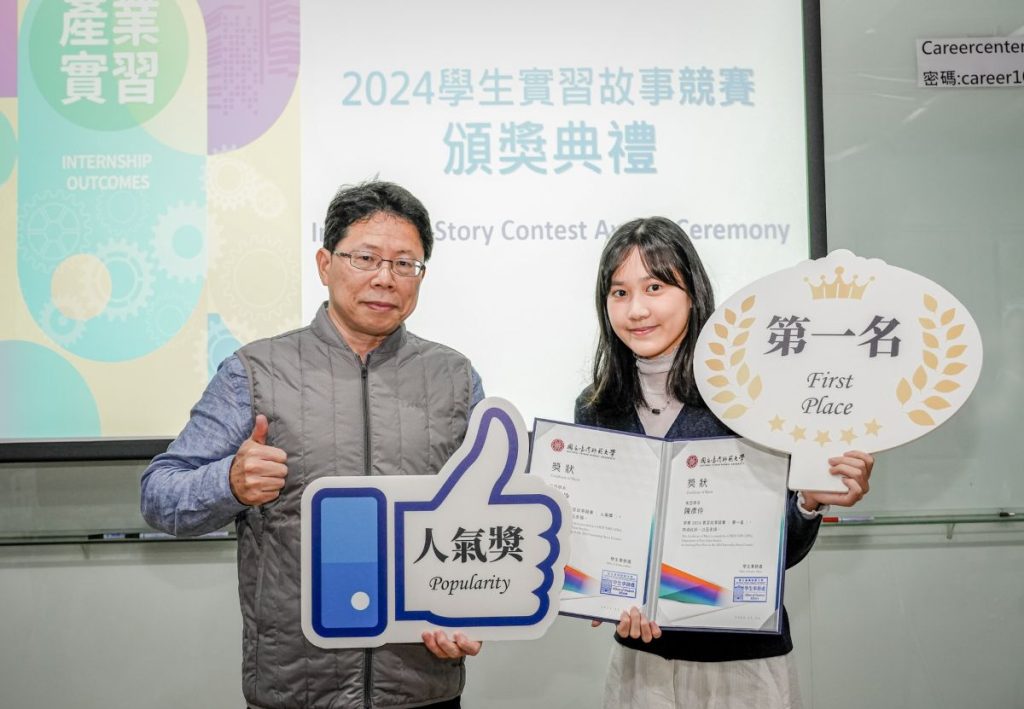
Career Development Center Internship Story Competition Award Ceremony
Strengthening Career Readiness and Expanding Pathways for Diverse Career Exploration
In response to the rapidly evolving industry landscape and the employment challenges faced by young people, NTNU actively strengthens the bridge between campus and the workplace by hosting job fairs and a wide range of career development activities. These initiatives support students in exploring career directions, understanding industry trends, and enhancing their readiness for entering the labor market. The “Career Lead to the Future” Job Fair held in March 2024 brought together more than 50 companies across sectors such as technology manufacturing, digital marketing, and professional services. In collaboration with government agencies and 104 Job Bank, the event also offered résumé clinics and other professional services, attracting strong student participation and broadening their career perspectives.
To enhance students’ professional capabilities, NTNU actively promotes interdisciplinary curriculum development, establishing programs such as the Interdisciplinary AI Applications Curriculum and the Graduate Institute of Green Energy Technology. In 2024, the University further partnered with TSMC to launch the “NTNU × TSMC Semiconductor Microcredit Program,” aimed at cultivating technologically skilled professionals with strong industry competitiveness. Currently, more than 60% of NTNU graduates enter the private sector, demonstrating the University’s successful transformation from a teacher education–focused institution into a comprehensive university with diverse academic strengths. The Career Development Center also offers a series of workshops—including résumé writing, interview techniques, and professional etiquette—to strengthen students’ soft skills in communication, adaptability, and problem-solving, thereby enhancing their confidence and career planning capabilities.
To support international students seeking to develop their careers in Taiwan after graduation, NTNU’s Office of International Affairs and the Taiwan External Trade Development Council co-hosted the “Career Strategies for International Students in Taiwan” seminar. The event featured briefings from the National Immigration Agency and the Ministry of Labor on residency and work regulations, along with recruitment information from companies such as Delta Electronics, Keding Enterprises, and LCY Group, helping international students better navigate the Taiwanese job market.
Looking ahead, NTNU will continue to strengthen collaboration with industry and government partners, expand career development programs, and increase opportunities for internships and employment. These efforts aim to support students in building diverse career pathways and ensure a smooth transition into the next stage of their professional journeys.

Group photo from NTNU’s “Career Lead to the Future” Job Fair in 2024.

The Office of International Affairs hosting the “Career Strategies for International Students in Taiwan” seminar.