

SDG6 Clean Water and Sanitation
Tracing the Lifecycle of Water Resources from Source to End Use
To enhance awareness and understanding of water sustainability, NTNU organized a series of educational activities centered on the theme of clean drinking water. Participants visited key water resource facilities across Taiwan, exploring the full lifecycle of water—from source areas and water purification processes to supply systems and wastewater treatment. These activities deepened participants’ knowledge of integrated water governance and conservation.
The series included visits to the Pinglin and Shiding water catchment areas to understand the importance of source-water protection and related industrial restrictions; the Chihtan Water Purification Plant, the largest in Taiwan and responsible for supplying nearly 70% of potable water to the Greater Taipei region; and the Taipei Water Park, an environmental education site dedicated to water conservation. Participants also visited the Dihua Wastewater Treatment Plant to learn about wastewater processes and their critical role in public sanitation.
The “Enhancing Environmental Awareness Among Watershed Residents and Assisting Regional Development Plans” program brought together environmental education experts, university faculty, and principals, supervisors, and teachers from elementary and junior high schools. Through site visits and professional exchanges, the program facilitated discussions on planning and management of water source protection zones, organizational operations, and relevant regulations. It also strengthened the capacity of educators to integrate local water resource issues into teaching and promoted long-term water education within communities.
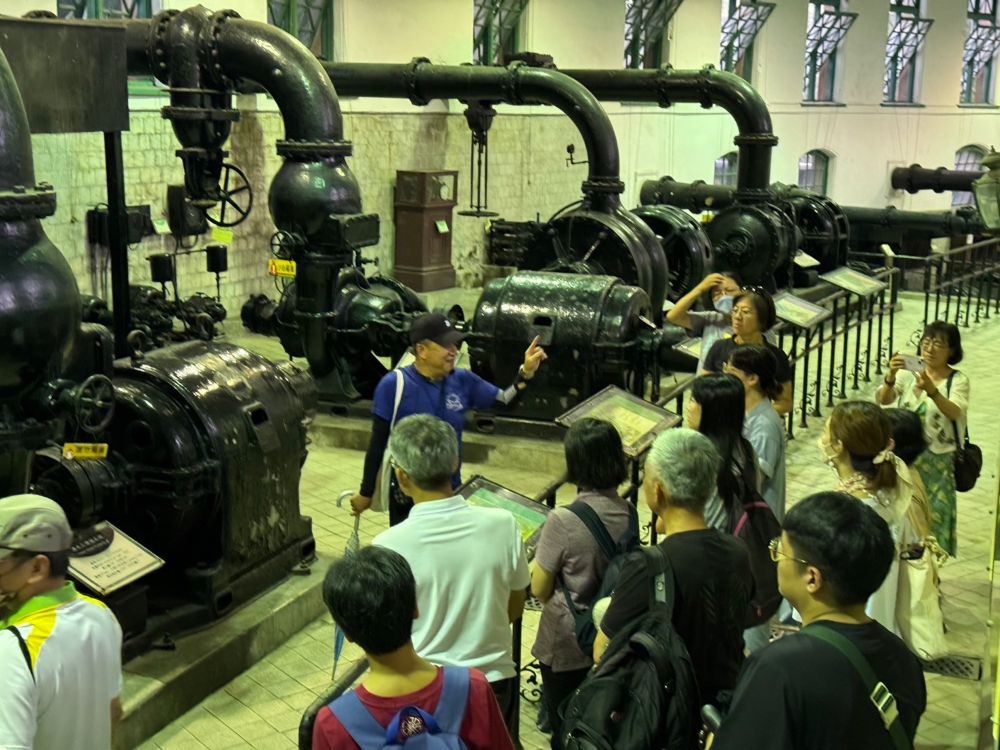
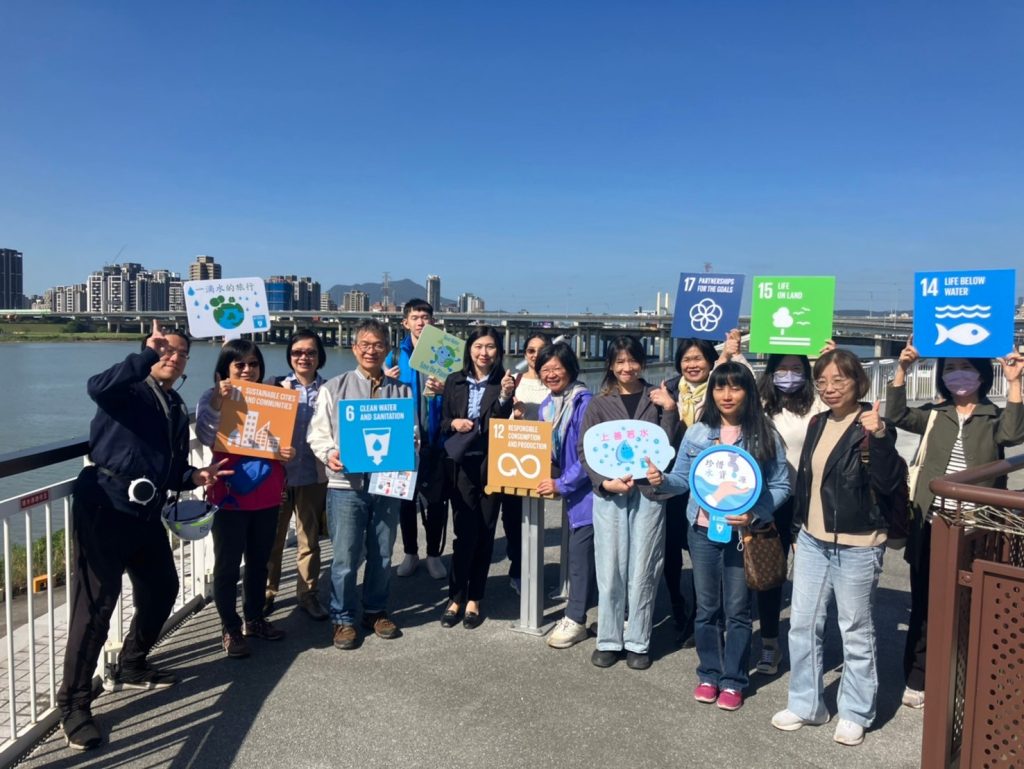
Visit to Taipei Water Park and Dihua Wastewater Treatment for water resources education activities.
Analyzing Taiwan’s Water Resource Transition and Advancing Agricultural Water Adaptation and Sustainable Management
Associate Professor Lee Tsung-Yu of the Department of Geography conducted a research project examining Taiwan’s historical, current, and future water resource trends, proposing climate-adaptation strategies for regional water allocation with a focus on agricultural water management (2021–2024). Although Taiwan receives abundant rainfall, its steep topography causes rainwater to quickly run off to the ocean. Combined with stark wet-dry seasonal variability, this results in low per-capita water availability, placing Taiwan among the world’s water-stressed regions.
Current assessments show that agriculture accounts for nearly 70% of national water use, representing the primary demand sector. Reservoirs and groundwater supply about 24% and 20% of water resources, respectively; however, sedimentation reduces reservoir storage capacity, with southern Taiwan’s reservoirs experiencing sedimentation rates as high as 36.8%. Climate change further intensifies extreme rainfall patterns, increasing pressure on both drought and flood periods and posing significant risks to agricultural water security.
To address these challenges, the study proposes climate-adaptation strategies, including adjusting crop types and planting schedules based on hydrological and climatic zoning to optimize water allocation without exceeding environmental carrying capacity. Additional recommendations include enhancing governance structures through increased use of reclaimed water, strengthening groundwater recharge, improving reservoir management efficiency, and integrating land-use planning to support inter-regional water transfer mechanisms. The research provides a model for climate-adaptive irrigation management in Taiwan and lays a scientific foundation for long-term water security and sustainable resource governance.
Winning International Recognition for the “Wild Wetlands” Documentary and Advancing Awareness of Wetland Conservation Through Visual Storytelling
Wetlands serve vital ecological functions—including water purification, flood regulation, biodiversity protection, and climate moderation—and play a critical role in sustainable water management. They mitigate the impacts of extreme climate events and provide essential habitats for numerous species, contributing to harmonious coexistence between humans and nature.
Professor Fang Wei-Ta of the Graduate Institute of Sustainability Management and Environmental Education has long been dedicated to wetland conservation and public education. His ecological documentary Wild Wetlands captures diverse wetland landscapes across Taiwan, from alpine wetlands and agricultural wetlands to riverine and coastal ecosystems. The film showcases rare wetland environments and ecological richness, featuring scenes of waterbirds foraging and documenting the behaviors of protected species such as the crab-eating mongoose and the black-faced spoonbill.
Wild Wetlands has gained international acclaim for its educational and environmental impact. It received the “Best of Best Award” jointly presented by the Ramsar Regional Center – East Asia (RRC-EA) and the Asia Chapter of the Society of Wetland Scientists (SWS Asia), recognizing the documentary’s exceptional contribution to promoting wetland conservation and enhancing public environmental awareness.
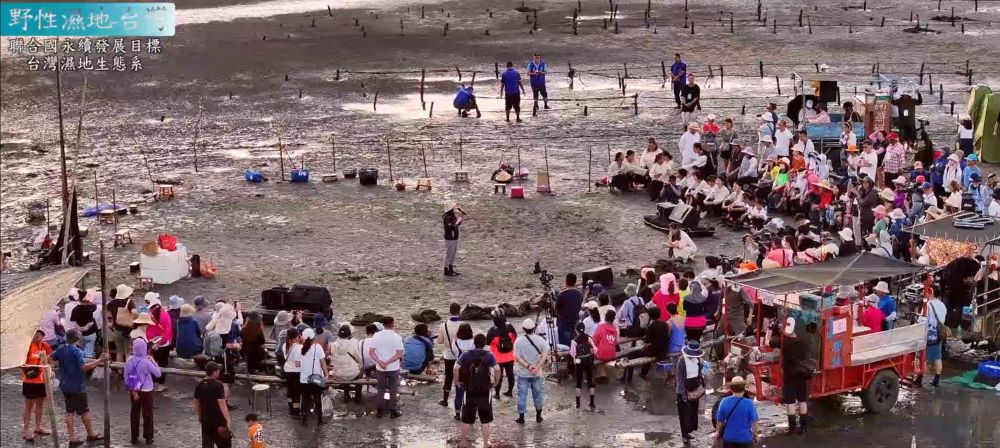
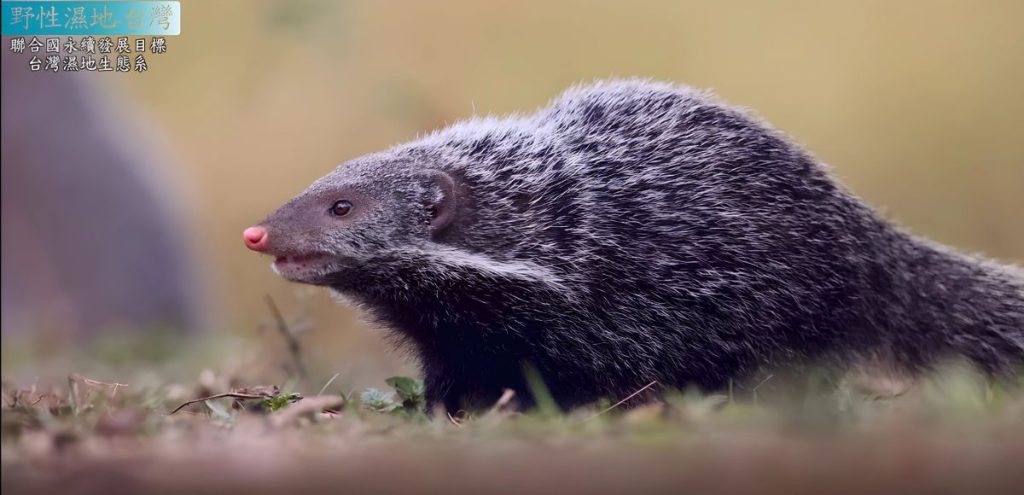
A scene from the documentary “Wild Wetlands,” featuring the crab-eating mongoose, a protected species inhabiting Taiwan’s intertidal zones and alpine wetlands.