

SDG14 Life Below Water
Advancing Sustainability Education: Students Achieve Double Medals in International Competitions Through Educational Research and Practice
The university continues to advance sustainability education by developing and implementing innovative educational programs. Under the guidance of Professor Meng-Wan Yeh from the Department of Earth Sciences, two student teams designed education projects centered on climate change and ecological environments, earning a gold medal and a silver medal at the NASA Space Apps Challenge (hereafter “NASA Hackathon”). The gold-medal team created an online platform titled “Wetland Formula & CO₂ Earth”, which visualizes the carbon-sequestration capacity of wetlands. The silver-medal team developed an “SDG Marine Education Kit” aimed at enhancing high school students’ understanding of climate change and marine ecosystems.
The university implements the Ministry of Education’s “Project for Supporting Sustainability-Integrated Curriculum Development in Elementary and Junior High Schools.” Through guidance in school-based curriculum development, the project integrates local life, production, and ecological contexts into instructional applications. By incorporating regional marine resource issues, students examine changes and causes in local fisheries and reflect on the relationship between the ocean and the community, thereby providing knowledge, innovation, and solutions that support local sustainable development.
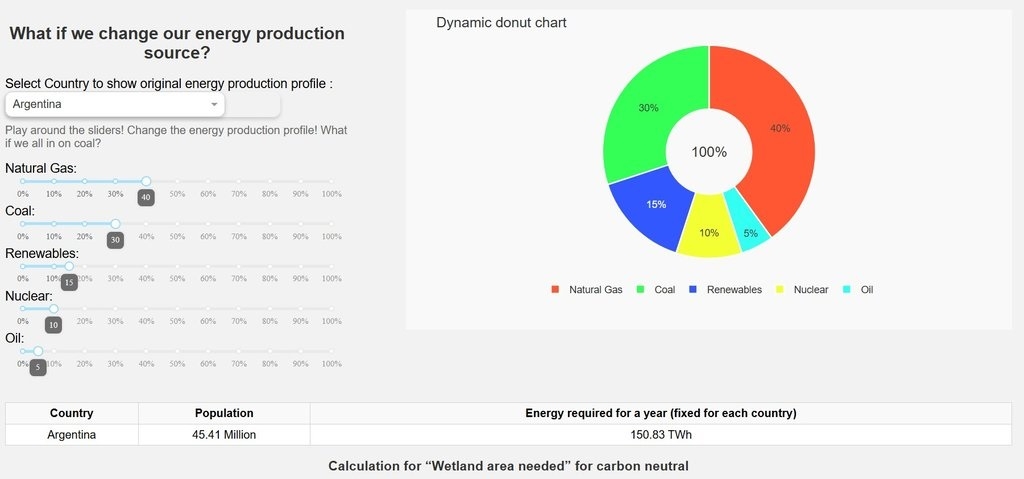
Screenshot of the “Wetland Formula & CO₂ Earth” web platform
The Graduate Institute of Sustainability Management and Environmental Education has long encouraged and supported students in forming the self-directed ECO Team, which conducts routine maintenance and management of the university’s artificial wetland on the Gongguan Campus—such as removing invasive species and carrying out ecological surveys. Since its establishment in 2018, the ECO Team has continued its work each semester, collaborating with teachers from secondary schools in the Greater Taipei area—including Xihu Experimental Middle School, Zhishan Junior High School, and Jingxing Junior High School—to lead high-concern students in environmental education activities at the artificial wetland.

The “SDG Marine Education Kit” guides students to learn how to balance human needs with sustainable development through data analysis, role-playing, and interactive game activities.
The Department of Life Science Collaborates with Multiple Schools to Collect Marine Data and Advance Climate Research
Professor Chi-Chung Chen of the Department of Life Science leads the Northwestern Pacific Ocean Blue Carbon Integrated Research Project under the “Navigating the Blue Ocean Master Plan.” The research team conducted a 24-day expedition aboard the Taiwan-built research vessel New Ocean Researcher I, covering 25,000 nautical miles to investigate various oceanographic physical parameters and atmospheric conditions.
Meanwhile, the research team led by Associate Professor Lin-Hu Shen of the College of Life Science conducts global investigations and analyses of marine plastic pollution. Their findings show that 80% of marine plastic pollution originates from rivers, with Asia contributing the largest share. The study emphasizes that efforts to reduce plastic waste should focus on improving waste management and recycling systems, as well as encouraging the development of alternative materials to replace single-use plastics—otherwise, plastics may return to humans through the food chain.
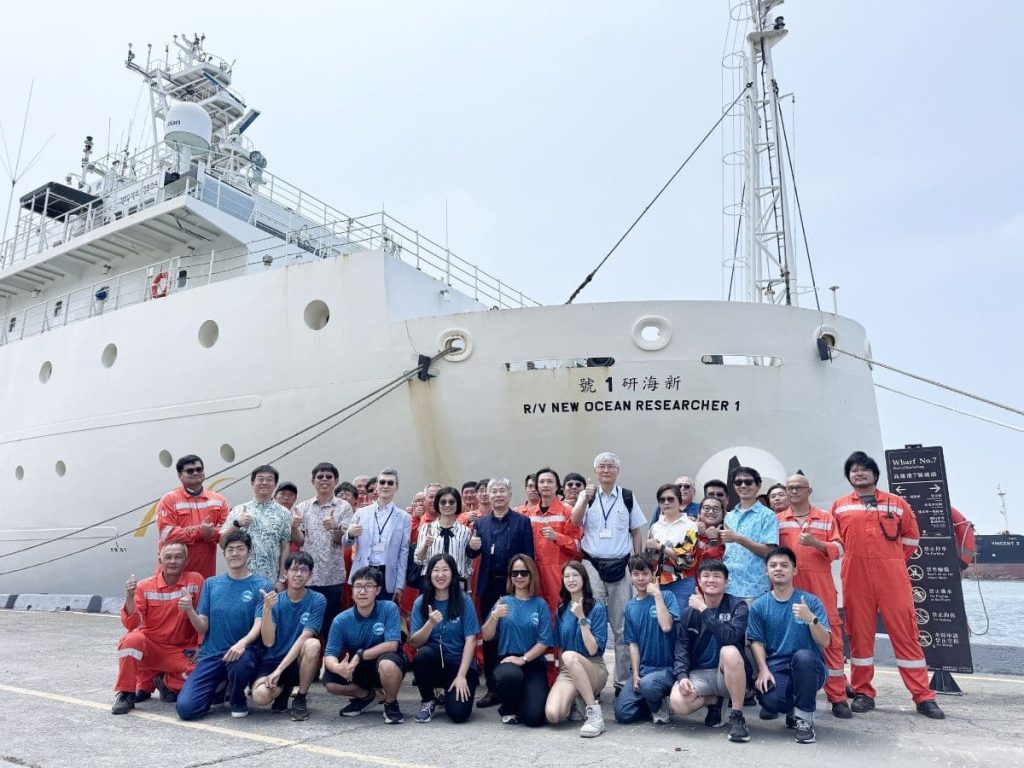
Group photo of the New Ocean Researcher I research team
The 15th Wetland Symposium Hosted by the University Highlights Wetlands, Human Well-Being, and Climate Change

The 15th Taiwan Wetland Ecosystem Symposium
The university, in collaboration with the Taiwan Wetland Society, hosted the 15th Taiwan Wetland Ecosystem Symposium, centered on the themes “Wetlands and Human Well-Being” and “Wetlands and Global Change: Mitigation and Adaptation.” Scholars and civil society organizations with extensive experience in wetland research and monitoring were invited to share their findings and conservation practices. The symposium brought together more than 200 scholars, experts, and graduate students.
A total of 56 wetland research papers were presented, covering topics such as wetlands and climate change, international perspectives on wetlands, wetland scientific assessment and management, wetland biodiversity, ecosystem services and Nature-based Solutions (NbS), wetland socioeconomics and culture, wetland communication and education, and wetlands and national policies. The symposium contributed to a comprehensive advancement of wetland conservation, restoration, and education efforts, addressing global climate change and extreme weather while underscoring the value and importance of wetlands.
Professor Deng-Chiu Lin Leads the Establishment of a Long-Term Socio-Ecological Core Observation Platform to Build a Foundational Data Collection System
Since 2021, Professor Deng-Chiu Lin of the Department of Life Science has served as the principal coordinator of the National Science and Technology Council’s project “Long-Term Socio-Ecological Core Observation Platform Research” through 2024. This project differs from traditional ecological monitoring initiatives by emphasizing not only long-term research and observation, but also the integration of ecological and social systems. Its aim is to address the impacts of global change on socio-ecological systems and to promote a new model for long-term socio-ecological research networks.
Using the concept of core infrastructure, the project establishes long-term research stations in representative socio-ecological systems across different regions. These stations build foundational facilities and monitoring systems. At the Changhua and Green Island stations, in addition to long-term monitoring of marine and intertidal environments, the project conducts interviews within local communities to collect perspectives from various stakeholders on environmental, economic, and social issues.
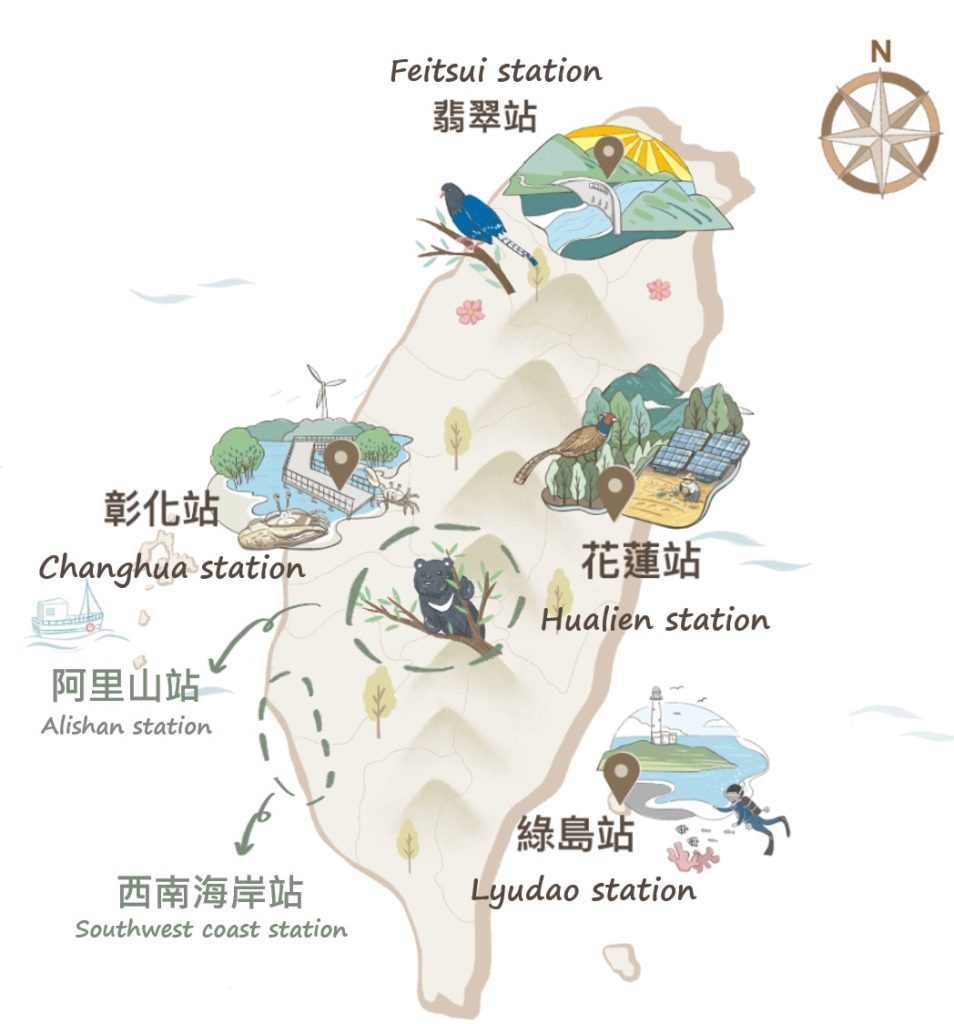
The Six Long-Term Socio-Ecological Core Observation Platforms