

SDG13 Climate Action
Greenhouse gas inventory
In 2018, NTNU conducted its first greenhouse gas inventory at the Gongguan campus in accordance with ISO 14064-1:2006, obtaining third-party verification and laying the foundation for campus carbon management. In 2024, based on ISO 14064-1:2018, NTNU completed its 2023 greenhouse gas inventory for the entire campus—including the Heping, Gongguan, and Linkou campuses—and received verification from DNV AG. The 2023 inventory results will serve as the baseline year, with emissions tracked annually thereafter.
The 2024 greenhouse gas inventory encompasses emissions from Categories I through V, as defined in ISO 14064-1:2018. According to the inventory results, the university’s total emissions in 2024 amounted to 33,450.389 tons of CO₂e. The primary emission sources were Category II and Category IV, contributing 15,920.146 tons of CO₂e (47.59%) and 14,212.173 tons of CO₂e (42.49%), respectively. This indicates that campus energy use and the procurement of products and services are the main contributors to the university’s carbon emissions.
Compared to the base year 2023, the university’s total emissions in 2024 decreased by 0.81%. This reduction was primarily due to decreases in Category 4.1, “Purchased Products and Services, and Category 5.2, “Energy Use of Downstream Leased Assets. Categories I and II experienced slight increases, mainly driven by higher annual electricity consumption. Moving forward, the university will continue to implement energy conservation and low-carbon initiatives, promote efficient energy management and the adoption of renewable energy, and progressively work toward achieving net-zero emissions on campus through scientific inventory and monitoring.
Sustainable Circular Economy Technology Wins Top Innovation Award
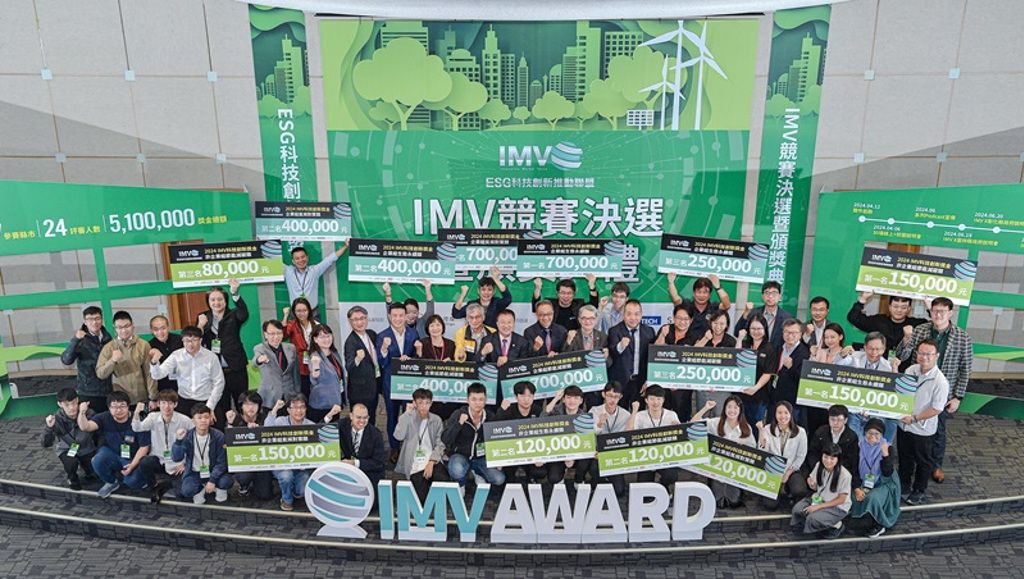
Peide Sustainability won the “First Prize in the Ecological Sustainability Category” at the IMV Technology Innovation Award for Enterprises, presented by the ESG Technology Innovation Promotion Alliance.
Pei-Te Sustainable Technology Co., Ltd., a spin-off company from NTNU, leverages key technologies developed by Professor Hsieh Chen-Chieh of the Department of Optoelectronic Engineering. By utilizing optoelectronic AIoT sorting technology, the company has overcome a significant technological bottleneck in global textile sustainability and recycling. This innovation enables rapid and accurate identification and sorting of various textile materials, surpassing the limitations of manual interpretation. In 2024, Pei-Te Sustainable received the “Top Prize in Eco-Sustainability” in the Enterprise category of the IMV Technological Innovation Award, presented by the ESG Technology Innovation Promotion Alliance. The core value of this technology lies in implementing Sustainable Materials Management (SMM) based on Information and Communication Technology (ICT), establishing a critical foundation for resource management and pricing in the forthcoming carbon fee era. Additionally, this technology enables high-value processing machines within the circular ecosystem to manage input materials and maintain carbon footprint records.
The IMV Technological Innovation Award, established by WPG Holdings—the world’s largest semiconductor distributor—aims to support innovations in eco-sustainability as well as energy-saving and carbon-reduction technologies. Pei-Te Sustainable will collaborate with the National Science Council at the Consumer Electronics Show (CES) to showcase the world’s first AI-based clothing recycling bin.
From Climate Challenges to Social Responsibility: Cross-Domain Actions at the Student Sunshine Sustainability Festival
In 2024, student clubs organized a three-week “Sunshine Sustainability Festival” market event, inviting 70 vendors to promote diverse social issues and sustainability concepts. Several sustainability-related organizations were invited to share their experiences and perspectives, covering topics such as media, environment, animal welfare, child education, and mental health. Participating organizations included Aiwuyou Biodegradable Packaging Materials, the Sustainable Recycling Cup Platform, United Daily News Advocates, Tasteme Zero Waste Sharing Platform, the Taiwan Animal Society Research Association, Micro Light Box, the Sunshine Association, and the Overblue Association for Accompanying People with Depression. On-campus organizations included the Social Practice Project Office, the Center for Sustainable Development, and the Center for Plastic Reduction and Sustainable Consumption Promotion. The event encouraged students to understand sustainability from multiple perspectives and expand their practical participation. It aimed to help students understand that building interdisciplinary collaborations and sustainability partnerships is essential for jointly addressing global sustainability challenges and for achieving a better society.
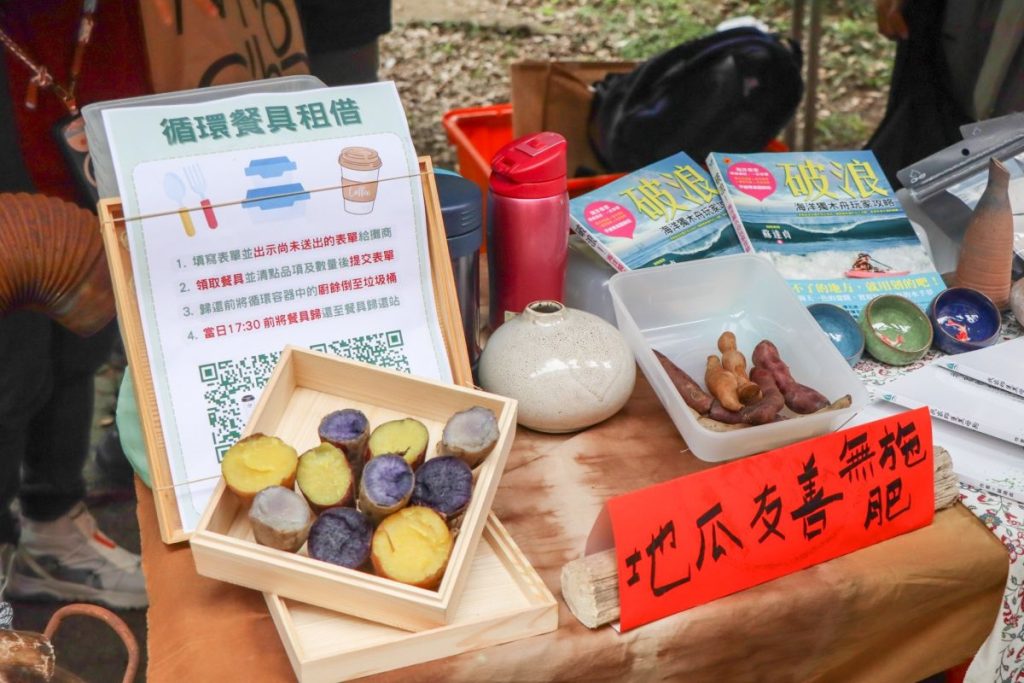
Market stalls offer friendly food and environmentally friendly tableware for rent.
Integrating education expertise to promote the cultivation of green-collar talent
NTNU’s Institute of Sustainable Management and Environmental Education integrates the objectives of environmental education and sustainable management to cultivate professionals with core sustainability competencies. In 2023, NTNU further established the Institute of Green Energy Technology and Sustainable Governance to promote green energy development and resource sustainability. Through industry–academia collaboration, the university works with enterprises to build an interdisciplinary green energy application platform, develop advanced green-energy talent, and strengthen mechanisms for participation in green electricity, supporting national priorities in the circular economy.
In partnership with the Ministry of Environment, NTNU established the Net Zero Green Collar Talent Northern Region Training Center to advance national capacity in areas such as carbon management and GHG inventory methodologies. Under the theme “Greenhouse Gas Inventory in Colleges and Universities,” NTNU convened nine member institutions of the Taiwan Sustainable Governance University Alliance to review campus carbon management practices and explore frameworks for inter-university collaboration and university social responsibility.
To enhance institutional GHG governance, NTNU completed GHG inventories across all three campuses and made the inventory procedures accessible to students. Through direct participation and case-based learning, students gained practical experience and a deeper understanding of GHG accounting methodologies and standards.
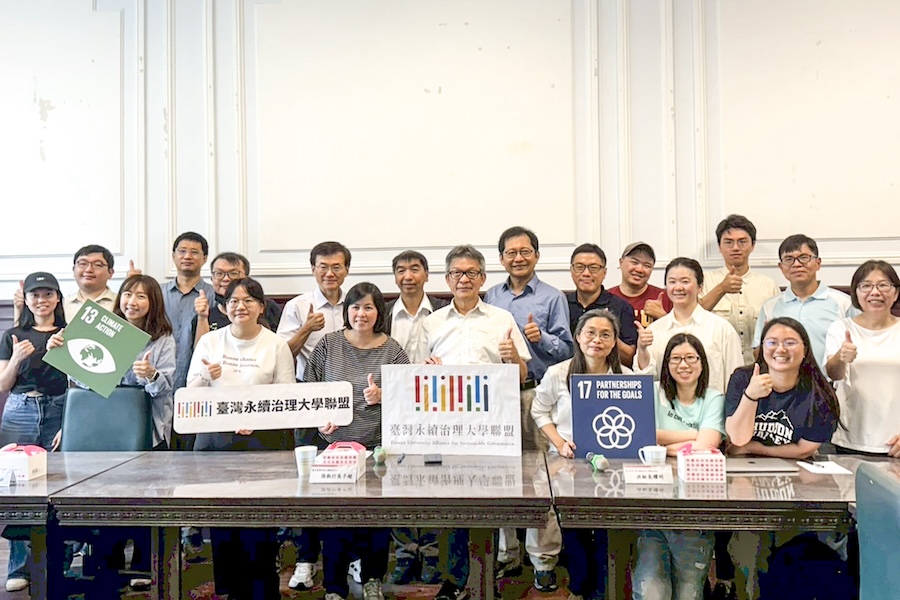
NTNU hosted the “Greenhouse Gas Inventory in Colleges and Universities” workshop.