

SDG1 No Poverty

Promoting Inclusive Admissions and Tailored Support to Expand Educational Opportunities for Disadvantaged Students
To enhance the public nature of higher education and safeguard access for students from economically disadvantaged backgrounds, NTNU adopts diverse admissions pathways to broaden the applicant pool. Under the “Morning Light Program,” eligible students are exempted from application fees and may apply for subsidies covering transportation and accommodation during admissions-related activities, thereby encouraging their participation in entrance evaluations.
| Morning Light 1.0 | Each department participating in the University Admissions Application scheme prioritizes the admission of at least one economically disadvantaged applicant. | A total of 54 priority admission places are offered annually. |
| Morning Light 2.0 | To motivate and support students from underprivileged backgrounds, priority admission is extended to those meeting economic hardship criteria as well as children of new immigrants. |
NTNU further provides a comprehensive set of tailored support mechanisms for economically and culturally disadvantaged students, including:
| Financial Support | Tuition and fee waivers, accommodation and clinic subsidies, a wide range of scholarships and grants, and emergency financial assistance to ensure academic continuity and well-being. |
| Learning Support | The Morning Light Learning Support Program, departmental tutoring services, and the “Dream-Building Learning Initiative,” which strengthen academic guidance and foster continuous learning. |
| Career Support | Career assessments, corporate and public-sector internship opportunities, résumé-writing workshops, and job-matching services to facilitate smooth employment transitions. |
| International Learning Opportunities | Programs such as “MOE Study Abroad for the Economically Disadvantaged” and the “Morning Light Overseas Learning Grant” provide scholarships to ensure equitable access to international exposure. |
In teacher education, the university implements a state-funded training scheme to encourage eligible disadvantaged students to enter the teaching profession. Beginning in 2025, NTNU launched the first “State-funded Program for Technical and Vocational High School Teacher Training,” which plans to admit 15 students. Graduates will serve in rural high schools, contributing to equitable educational development and reducing urban–rural disparities.
Building a Comprehensive Teacher Training System and Advancing Educational Equity in Rural Areas
To address challenges in rural schools—such as insufficient resources and high teacher turnover—NTNU collaborates with the Ministry of Education to implement the PASSION Teaching Innovation Model, which integrates diagnostic assessment, student placement, and holistic teacher training. This initiative equips rural teachers with enhanced professional support, broadens students’ learning horizons, and strengthens diverse learning motivations.
NTNU has established the “PASSION Rural Education Certificate Program” on campus to cultivate qualified rural educators and enhance teaching capacity in under-resourced areas. Through active collaboration with public agencies, local governments, private organizations, and foundations, the university develops diverse support models to maximize impact.
For example, from 2022 to 2024, NTNU partnered with the Boyo Social Welfare Foundation to integrate the PASSION curriculum into Boyo’s teacher training system, cultivating seed teachers and enriching instructional modules and classroom management strategies. Leveraging Boyo’s extensive presence across rural Taiwan, this collaboration enabled the localized application of PASSION teaching practices, ultimately strengthening rural education through place-based innovation.
NTNU also engages with international organizations. Since 2022, it has collaborated with the Tzu Chi Foundation to implement the “International Mandarin Learning Volunteer Program,” supporting Syrian refugee students in Türkiye under the “Manahe Promise Project.” Trained volunteers develop competencies in Mandarin teaching, digital media application, and cross-cultural communication. In 2024, the program expanded to Chiang Mai, Thailand, providing high-quality remote Mandarin tutoring under the “Cross-Border Love Initiative” to support children in remote communities.
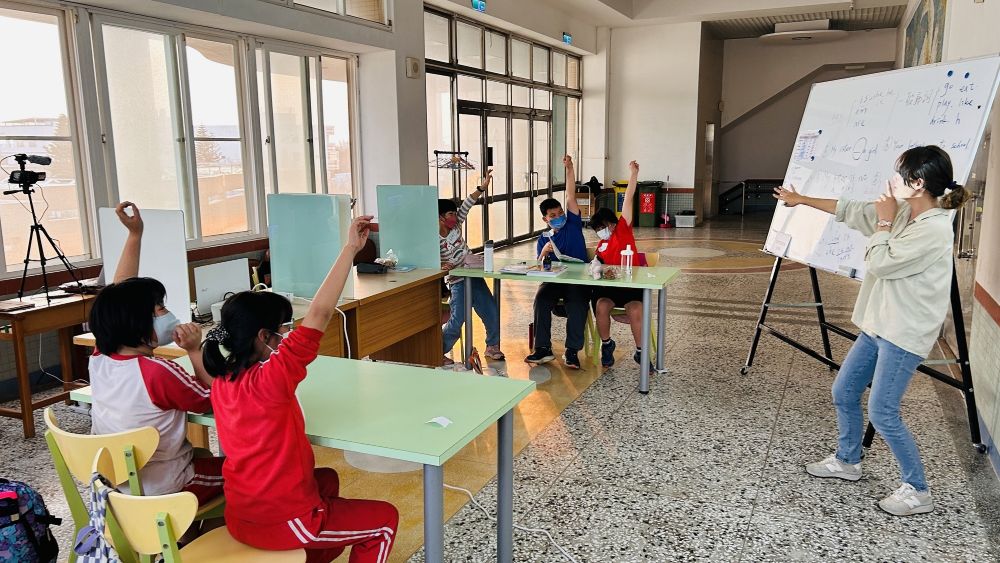
The Boyou Foundation’s seed teachers conduct in-person classes, and NTNU observes and provides feedback.
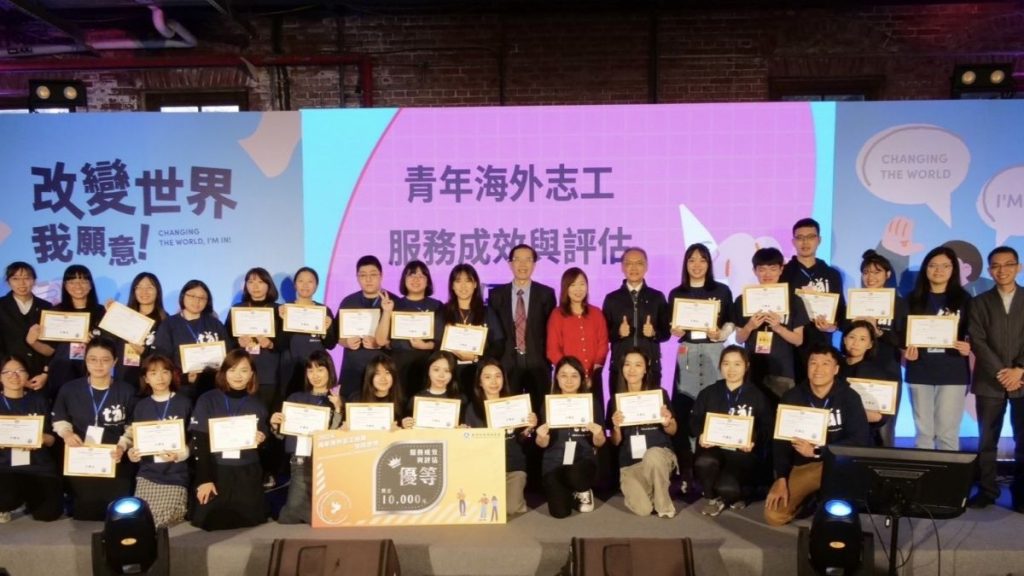
International Teaching Volunteers and Chinese Language Volunteer Teacher Training Course Completed.
Empowering Post-Earthquake Recovery Through Digital Innovation to Revitalize Hualien’s Local Economy
Following major earthquakes that disrupted transportation and severely impacted tourism—the economic backbone of Hualien—the university leveraged digital tools to support local revitalization. Professor Hsu Wen-wei, Dean of the College of Liberal Arts and Director of the Digital Opportunity Center (DOC) Program for Yilan–Hualien, mobilized local businesses to launch online group-purchasing campaigns, including “DOC Post-Earthquake Group Buy” and “DOC Good Goods Group Buy.”
Across two campaigns, 47 local businesses from various Hualien townships participated, offering over 100 products spanning agricultural goods, handicrafts, and specialty snacks. The initiatives received overwhelming support, generating more than NT$220,000 in sales and earning strong recognition from local merchants.
To further promote local industries nationwide, the university organized the “DOC Courtesy Time Market,” bringing together 20 featured vendors from across Hualien County to showcase the region’s cultural diversity and industrial charm. The event integrated promotional cash vouchers and the Council of Agriculture’s NT$250 Agri-Fan Points, successfully attracting large crowds and generating NT$150,000 in sales within just two hours. These efforts contributed meaningfully to the revitalization of Hualien’s post-disaster economy.
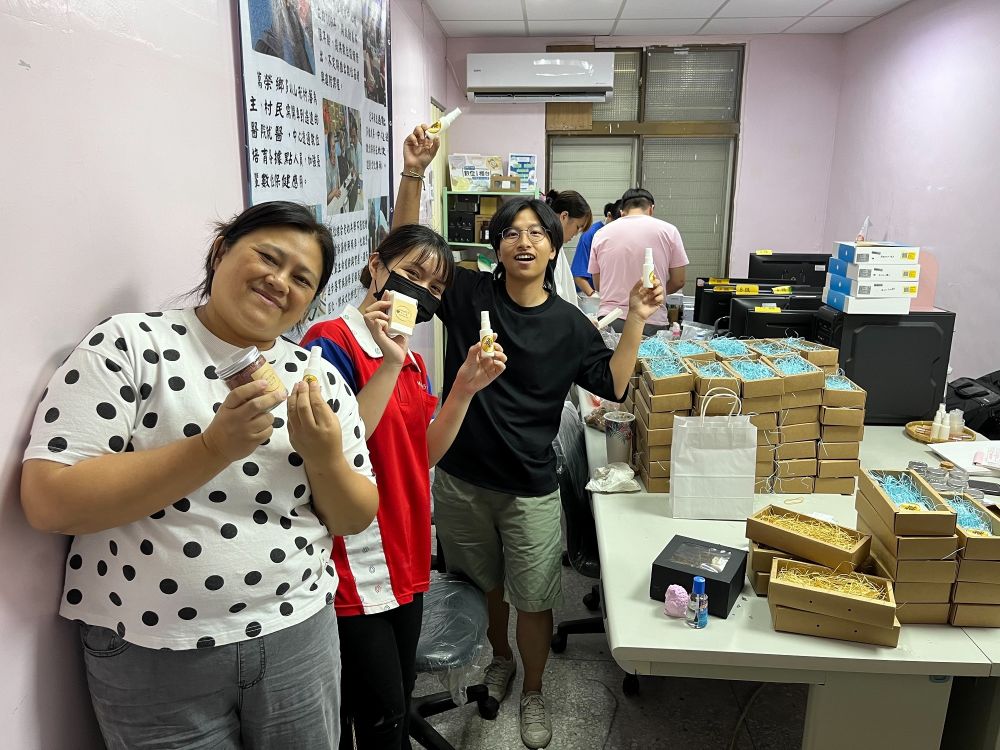
The Wanrong Red Leaf Community Development Association designs diffuser stones and handmade soaps using local imagery, hoping to sustain the development of local industries.
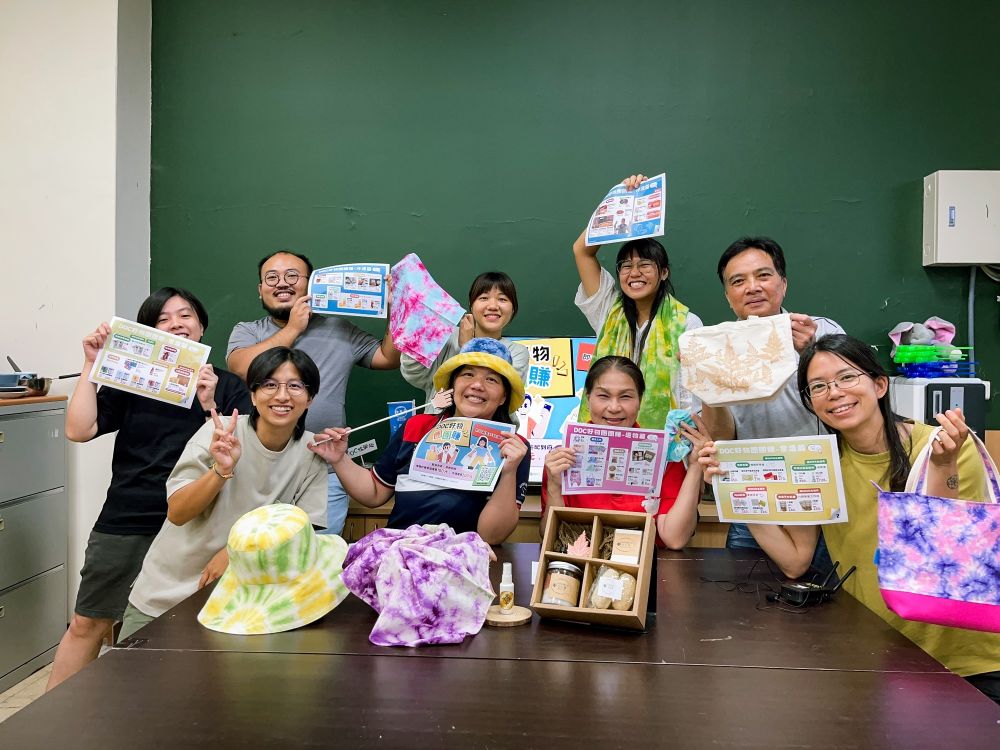
The coaching team organized a live-streaming event to sell local Hualien products.