

SDG17 Partnerships for the Goals
Leveraging Educational Expertise to Strengthen Collaborative Networks for Sustainable Education
NTNU draws on its strengths in education to maintain close, long-term collaboration with government agencies and to actively participate in the development of educational policies and systems. The Office of Student Affairs serves as the convener of both the Ministry of Education’s “Northern Region Coordination Center for Student Affairs” and the “Student Counseling Coordination and Advisory Center,” coordinating communication among 45 higher education institutions in northern Taiwan. Through these efforts, NTNU supports the advancement of student affairs and counseling policies, promoting youth development and mental well-being.
In teacher education, NTNU advances university social responsibility (USR) through programs that integrate gifted education resources and mentoring mechanisms for beginning teachers in partnership with the New Taipei City and Keelung City Governments. The University also undertakes projects commissioned by the Ministry of Education and local governments, including in-service bilingual education programs designed to strengthen schools’ bilingual curriculum implementation and align with national policy needs.
Amid the challenges of an aging society, the Higher Education Sprout Project Office and the Office of Educational Think Tank at NTNU published the Policy Recommendations for Middle-Aged and Older Adult Education in 2024. The document offers recommendations on four core competencies and integrated learning resources for middle-aged and older learners, supporting the government in building a forward-looking lifelong learning system. Additionally, NTNU collaborates with National Taichung University of Education, National Kaohsiung Normal University, and National Taiwan Sport University to jointly implement the Ministry of Education’s 2024 “Adaptive Physical Education Promotion Master Plan.” As the lead institution, NTNU produced the Policy Recommendations for Sustainable Development in Adaptive Physical Education, outlining the challenges and future directions of current policies and providing concrete action strategies for promoting sports equity and supporting learners with special needs.
Through its substantive involvement and policy contributions in student affairs, teacher education, aging education, and adaptive physical education, NTNU actively fulfills its social responsibilities and strengthens its public impact, demonstrating the role and commitment of higher education institutions as key partners in sustainable governance.
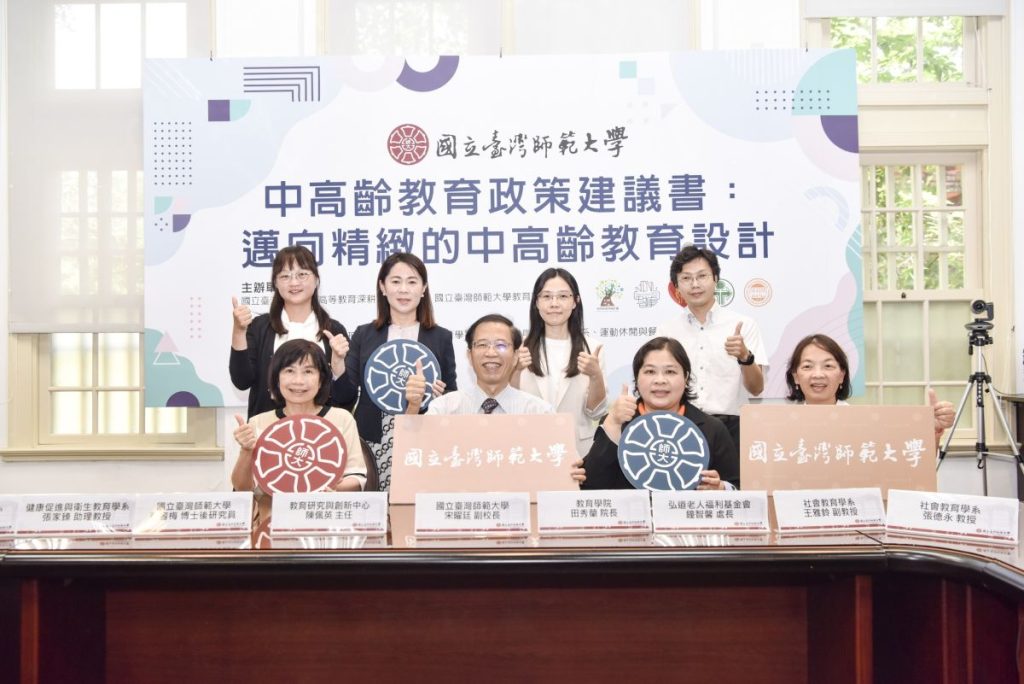
Group photo from the press conference for the release of the Policy Recommendations for Middle-Aged and Older Adult Education.

Group photo from the Joint Achievement Presentation of the Adaptive Physical Education Promotion Master Plan.
Partnering with Leading Global Universities to Build a Bilingual Education Collaboration Network
Since 2021, NTNU has been designated annually by the Ministry of Education as a key institution under the “Bilingual Education for Students in Colleges” initiative. In 2022, the University established the EMI Teaching Resources Center, assuming the national responsibility of EMI teacher training. To date, hundreds of instructors have completed professional courses and obtained certification through the Center, laying a solid foundation for the advancement of bilingual education in Taiwan.
Building on this foundation, NTNU has further expanded its international collaborations to connect EMI teacher training with global academic networks. In 2024, the University partnered with the University of Texas at Austin to develop an overseas summer training program, selecting 20 higher education faculty members nationwide to participate in curriculum design workshops and teaching practicums in the United States, followed by continued expert mentoring upon their return. This initiative not only strengthened cultural and academic exchange but also infused new momentum into Taiwan’s bilingual higher education development. NTNU also collaborated with Teachers College, Columbia University to launch Taiwan’s only EMI professional development program grounded in teaching practice research. Through synchronous and asynchronous online instruction, on-site mentoring, and fieldwork, the program provides comprehensive learning experiences that enhance teachers’ practical EMI teaching capabilities.
In addition to curriculum partnerships, NTNU hosted the international conference “Collaborative Construction of Knowledge through EMI” in October 2024, bringing together 21 scholars from Austria, Belgium, Hong Kong, the Netherlands, Spain, Sweden, and the United Kingdom, along with participants from 28 countries. The conference featured presentations on EMI teaching research and roundtable discussions exploring interdisciplinary collaboration, its challenges, and its pedagogical applications. This event not only strengthened NTNU’s engagement with global partners but also showcased Taiwan’s bilingual education initiatives on the international stage.
From national policy implementation to international academic collaboration, NTNU demonstrates both governance leadership and global connectivity. Through the sustained development of EMI initiatives and international partnerships, the University actively advances SDG 17, promoting bilingual education in Taiwan while contributing to and sharing innovative educational outcomes with the world.
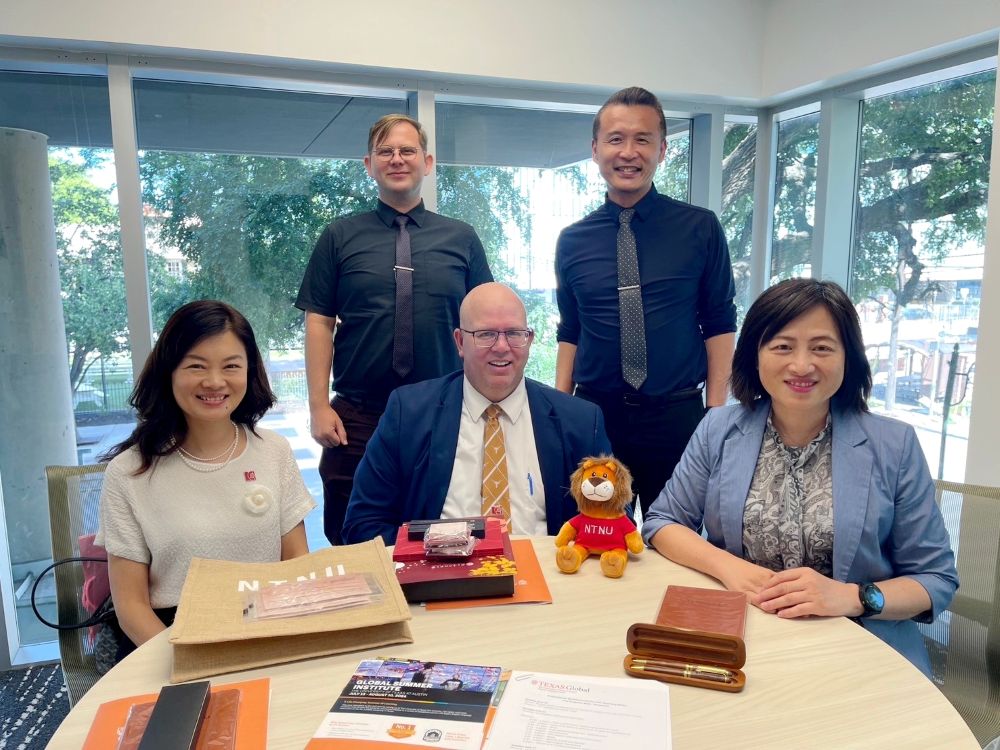
Signing ceremony for the NTNU–UT Austin collaboration on the EMI Overseas Training Program.
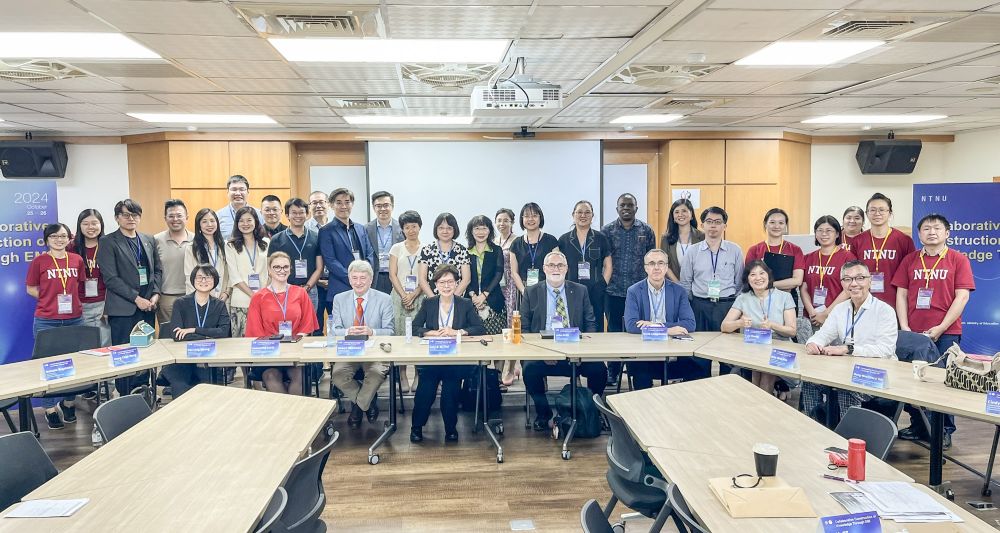
Group photo from the “Collaborative Construction of Knowledge Through EMI” conference.
Advancing International Exchange and Interdisciplinary Dialogue to Promote Sustainable Development
NTNU continues to deepen international academic exchange and interdisciplinary dialogue on sustainability, collaborating with universities around the world to support global sustainable development. For example, faculty and students from NTNU’s Department of Design participated in the “Fukuoka Cultural Sustainability Design Workshop” at the School of Design, Kyushu University, where students explored concepts of circular design and applied design thinking to real-world challenges, strengthening their understanding of cultural sustainability. Assistant Professor Chen-Wei Chang from the Department of Education led 27 students to Seoul National University for academic and cultural exchange, engaging in discussions on multicultural education and visiting organizations such as Good Neighbors International and UNESCO-APCEIU to learn about efforts to reduce educational inequality and support disadvantaged children.
Professors Hannes Bergthaller and Yi-Ping Liang from the Department of English also led nine students to the University of Stavanger in Norway to attend the international conference “Storytelling for Environmental Futures.” Scholars from around the world examined human–nature relationships through perspectives in literature, media, religion, history, philosophy, and the arts, while NTNU students presented papers on topics such as Formosan black bear conservation, feral cat eradication in Australia, and ecological disasters in Saint Vincent.
Through diverse international academic exchanges and field visits, NTNU students and faculty deepen their understanding of global sustainability issues, gain practical experience through interactions with international partners, and strengthen their cross-cultural communication and interdisciplinary collaboration skills. These experiences enhance the University’s engagement and contributions to global sustainable development and further support long-term knowledge exchange and international partnership building.
.jpg)
NTNU faculty and students visiting UNESCO-APCEIU, where staff introduced the center’s regional initiatives in global citizenship education.
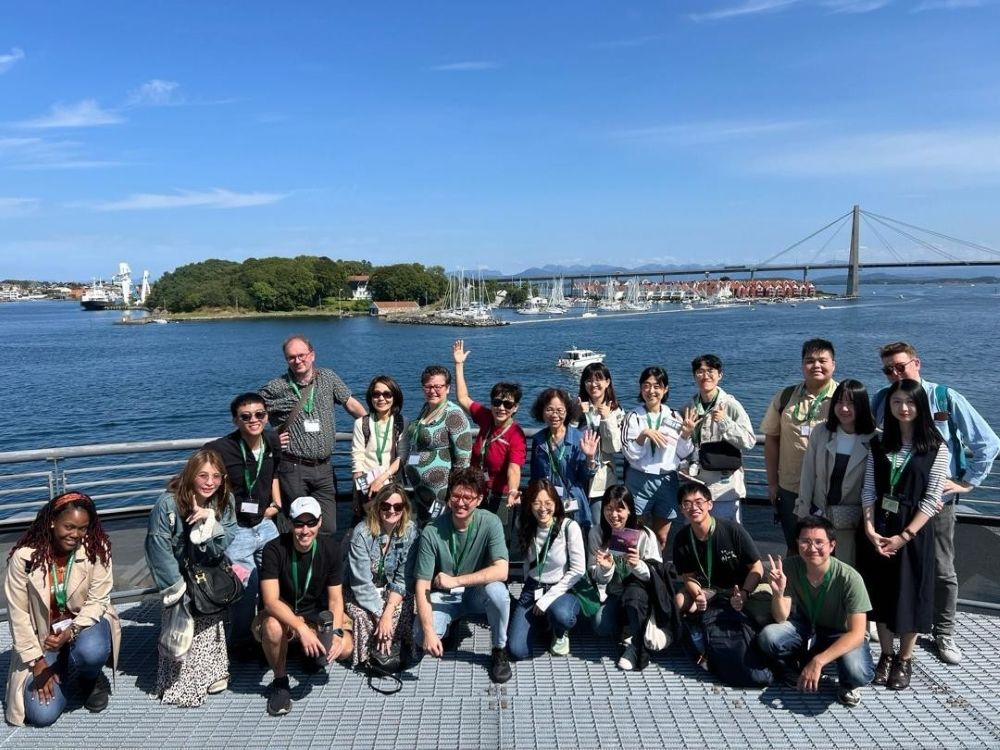
NTNU faculty and students presenting their research in Norway, advancing international exchange and engagement with environmental issues.