


SDG12 Responsible Consumption and Production
Implementing Campus Action: Establishing Plastic Reduction Guidelines and Advancing Plastic Reduction Education
The university has established a series of measures and policies to reduce the use of single-use items, including: banning convenience stores and campus restaurants from providing disposable chopsticks and spoons free of charge since 2016; prohibiting the use of plastic straws on campus since 2019; introducing the “NTNU Campus Plastic Reduction Regulations” in 2021 to encourage administrative units to reduce their use of plastic and disposable products; and requiring meetings and events to minimize the use of disposable tableware and bottled water starting in 2022. Beginning in 2025, the university will no longer provide any disposable plastic tableware free of charge.
NTNU also established the “Plastic Reduction Promotion Center,” which advocates for plastic reduction through social media and podcasts, and collaborates with local communities and organizations to host various outreach activities such as plastic-free markets, street cleanups, beach cleanups, and workshops. The Center has also developed multiple sustainability-themed board games and teaching materials, which are promoted through teacher training programs to expand the reach of sustainable consumption education.

Participants visiting a waste incineration plant with the Plastic Reduction Center.

The Plastic Reduction Center promotes education through sustainability-themed board games.
Professor Hsieh Chen-Chieh of the Institute of Electro-Optical Science and Engineering has developed an AI textile sorting system capable of processing up to 740 metric tons of textiles per year.
The NTNU electro-optical research team has implemented a Ministry of Economic Affairs project and developed an “Intelligent Textile Material Sorting System,” which integrates near-infrared rapid remote sensing with AI learning algorithms. The system assists textile recycling businesses in accurately classifying materials, which are then sent to downstream processors for appropriate recycling and reuse. Capable of processing up to 740 metric tons of textiles annually, the system helps industry address the “last mile” challenge in establishing a circular economy for textiles.
Advances in textile technology have resulted in clothing predominantly made from high-performance, cost-effective synthetic materials, fueling the global “fast fashion” trend. While modern textile technologies make garments affordable and high-quality, they have also led to significantly reduced average usage rates—many items are discarded even before their packaging is removed. This generates massive waste. Polyester (PET, Polyethylene Terephthalate), the same material used in plastic bottles, is one of the primary materials in fast fashion. As a petrochemical product, its manufacturing process consumes excessive water resources and produces large amounts of carbon emissions. Therefore, textile and plastic recycling has become an urgent issue.
The “Intelligent Sorting for Sustainable Textiles” system uses AI-driven learning algorithms and big data accumulation to continuously improve identification accuracy—achieving a rate of over 95%. As waste textiles and used clothing move along the conveyor belt, the optoelectronic sensing modules analyze blended compositions through qualitative and quantitative detection. Beyond polyester, the system can identify the proportions of multiple common textile fibers, recognizing various material types and their purity. Items are then directed by air valves into corresponding sorting bins, after which they are sent to downstream recyclers using appropriate remanufacturing methods. This resolves key bottlenecks in sustainable textile circulation and optimizes material and energy flows for other recycling processes as well.
This research aims to address the sorting needs that currently hinder the development of a sustainable textile circular economy, enabling waste textiles and plastics to regain value and contributing to the early establishment of a sustainable economic system.
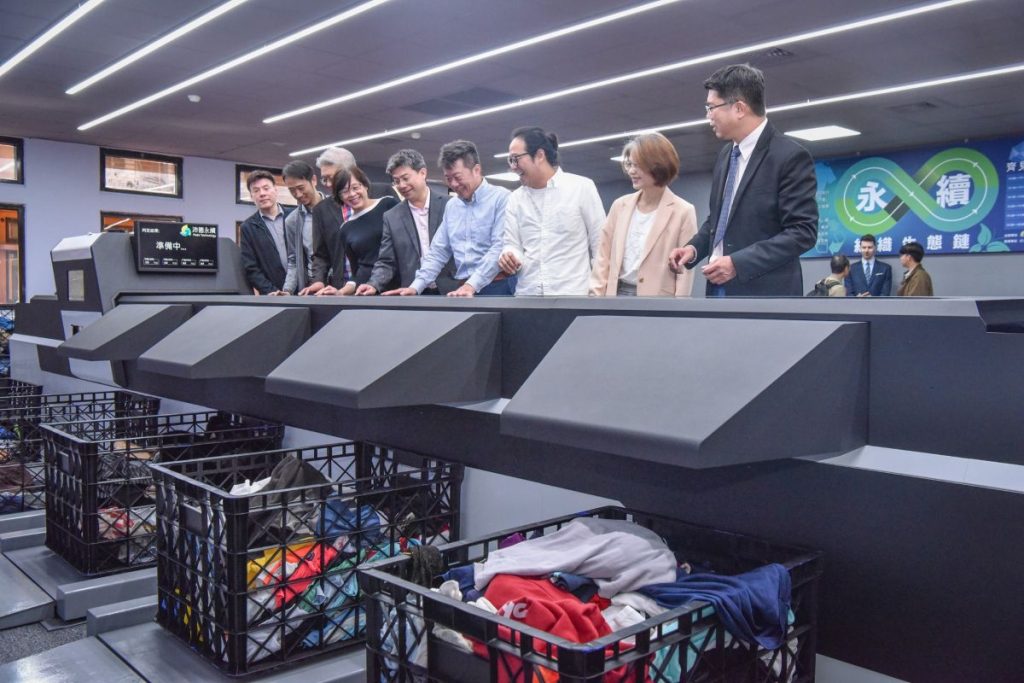
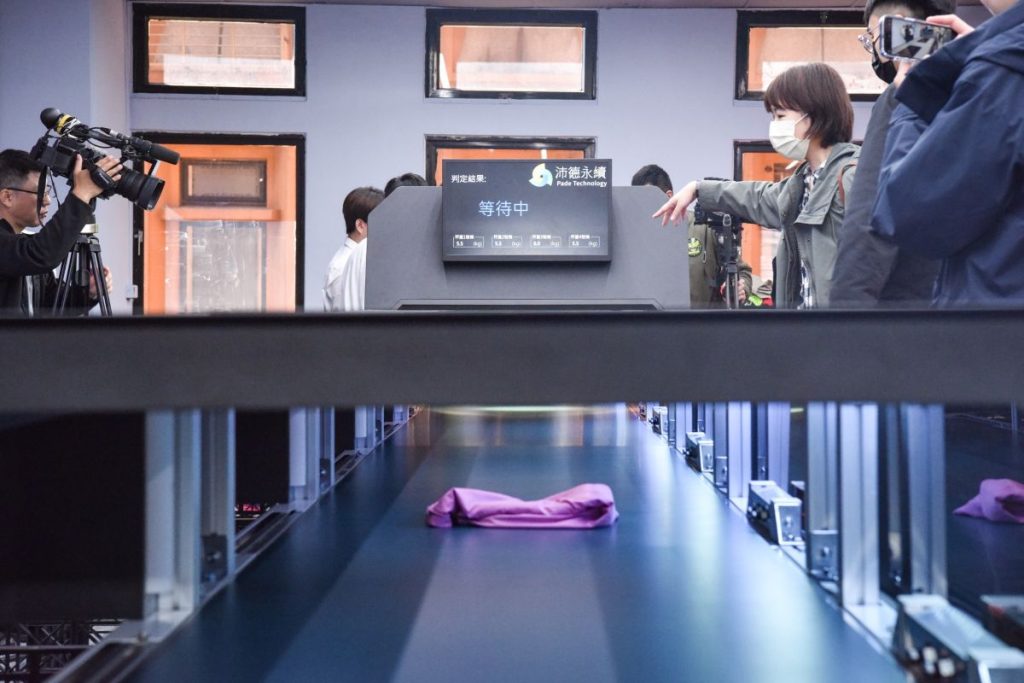
Operation of the “Intelligent Sorting for Sustainable Textiles” system.
The Warm Sun Sustainability Festival Market promotes sustainable consumption through packaging-free sales.
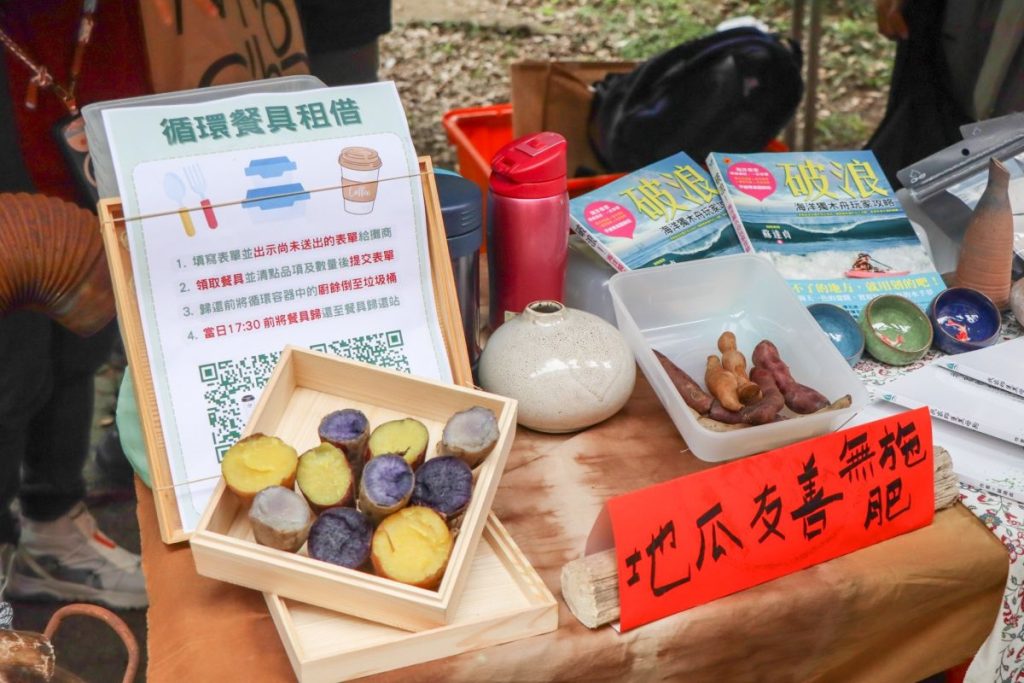
The Warm Sun Sustainability Festival embodies sustainable principles by selling products in a packaging-free manner.
The NTNU Student Association and NTNU Sustainability Pioneers co-hosted the second Warm Sun Sustainability Festival, inviting 70 vendors to promote diverse social issues and sustainability concepts. All 70 market vendors adhered to sustainability principles: food vendors sold products without packaging, requiring visitors to bring their own containers or rent reusable ones on-site.
The festival team also invited representative social organizations focused on key issues—such as animal protection, plastic reduction, and LGBTQ+ equality—to participate in the market and promote their causes. Through interactive installations, mini-games, and other engaging activities, the event enabled participants to deepen their understanding of sustainability and social advocacy while enjoying the market experience.
The “Gold Plastic Award” received 214 creative submissions, promoting plastic reduction and sustainable consumption concepts.
In November 2024, NTNU’s Plastic Reduction and Sustainable Consumption Promotion Center held the 7th “Gold Plastic Award,” actively responding to the United Nations’ “Global Plastics Treaty” initiative launched in 2022. A total of 214 creative submissions were collected from across Taiwan and abroad, covering four categories: board games, LINE stickers, sustainability actions, and picture books, all aiming to promote plastic reduction and sustainable consumption concepts.
The event incorporated innovative formats such as a board game design exhibition, teacher professional development workshops, and a sustainability showcase area. It also practiced environmental responsibility by using eco-friendly materials such as “Hsiuan-Ying Fabric” and partnering with catering vendors who support reusable dishware systems.
The award ceremony featured invited speakers, including You Hsin-Ying from Renou Plastic-Free and Chen Peng-Hung from Dear International, who offered innovative perspectives on sustainable consumption. Through their insights, the event sought to provide diverse professional viewpoints to guide discussions on sustainability issues and deepen participants’ learning across multiple dimensions.
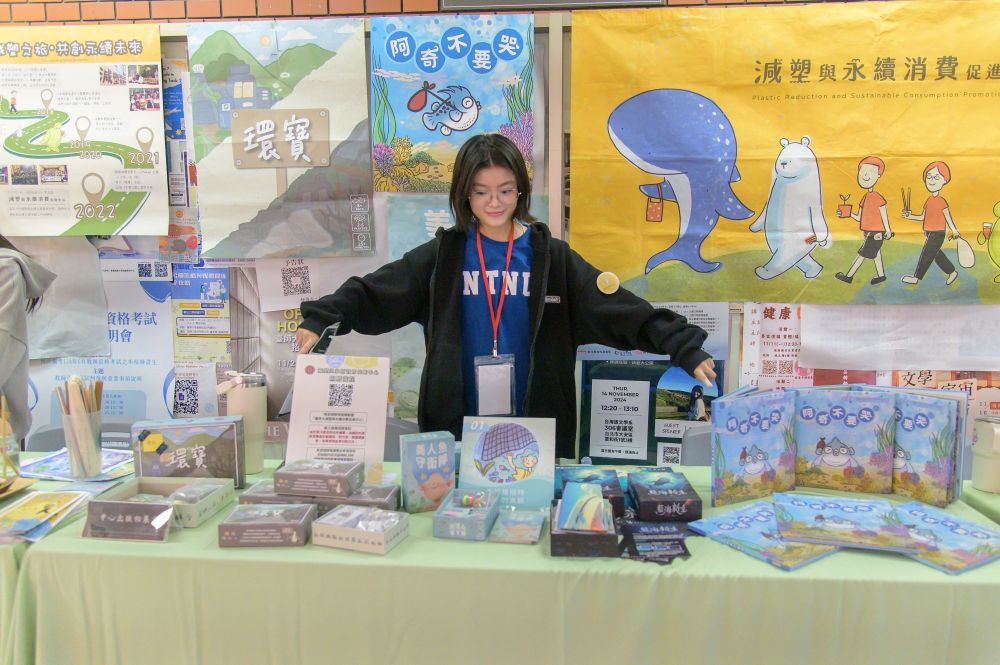
Award ceremony of the 7th Gold Plastic Award — Exhibition of publications by the Plastic Reduction Center.