

SDG4 Quality Education
Expanding International Participation in Science Literacy Reading Competitions and Advancing AI-Driven Reading Education
NTNU SmartReading Adaptive Learning Team has long been committed to promoting digital reading and literacy education. In collaboration with local governments and leading science education institutions, the team utilizes its proprietary AI-based text difficulty assessment technology to precisely diagnose students’ reading abilities and generate personalized reading lists, enhancing both reading efficiency and learning outcomes.
Since 2019, the team has organized the Science Popularization Reading Literacy Competition, which entered its fifth year in 2024 and has expanded into an international event. This year’s competition included schools from 21 cities and counties in Taiwan and Chinese-speaking schools in Hong Kong, with 667 participating schools and over 3,300 registered students—bringing total participation since inception to more than 15,000 students. Aimed at elementary and junior high school students, the competition encourages the reading and comprehension of science articles, fostering scientific interest and reading literacy while enabling teachers to monitor students’ progress and performance.
In 2024, the SmartReading team launched the SmartReading-English (SRE) platform for the first time. Designed for non-native English learners, SRE applies AI and big data analysis to classify English reading materials with precision. After completing a brief diagnostic assessment, learners receive a personalized reading list to guide individualized learning. The platform features diverse genres—including science, fiction, and practical life topics—and integrates tests and analytics to support teachers and students in tracking learning progress and comprehension, thereby building long-term English reading habits.
By advancing both Chinese and English SmartReading platforms, NTNU not only strengthens literacy and science learning among Taiwanese students but also connects with global partners, showcasing Taiwan’s reading education innovations on the world stage and demonstrating leadership in educational equity and digital learning.

NTNU developed the SRE Adaptive English Reading Platform and organized the SRE Adaptive English Reading Competition.
Using Aesthetics as a Core for Cross-Disciplinary Integration of Arts and Sustainability Education
Under the Ministry of Education–commissioned Cross-Disciplinary Aesthetic Education Excellence Initiative, NTNU promotes aesthetic learning as a bridge to explore social issues and the Sustainable Development Goals (SDGs). Through integrated arts-based curricula, the program cultivates empathy, critical thinking, and future-ready competencies among students.
At Qingshan Junior High and Elementary School in New Taipei City, the collaborative course “Chagall: Born from Love” uses painter Marc Chagall’s Jewish identity as an entry point. Students performed a silent mime reflecting the persecution of Jewish communities during World War II, enabling them to experience and reflect on moral dilemmas and historical injustice. The activity was also linked to World Hello Day (November 21, 2024), encouraging students to reflect on contemporary social conflicts and advocate for empathy and peaceful communication.
At Dacheng Arts Experimental Elementary School, the “Playing with Nature” Land Art Festival invited six groups of international artists from Taiwan, Mexico, Belgium, Thailand, Indonesia, and the Netherlands to create site-specific artworks in the school and surrounding community. Inspired by local materials from Tieding Village, the artworks incorporated natural elements such as wind, wood, water, fire, and earth, merging cultural observation, environmental awareness, and play-based learning. This initiative emphasized harmonious coexistence between people and nature and marked a significant milestone in advancing arts-based sustainability education.
Entering its tenth year in 2024, the Cross-Disciplinary Aesthetic Education Initiative continues to foster teacher collaboration networks, encourage overseas professional development, and deepen global cultural understanding. Through these efforts, the program strengthens the connection between arts education and societal issues, enhances student motivation, and advances the goal of aesthetics-centered sustainability education.
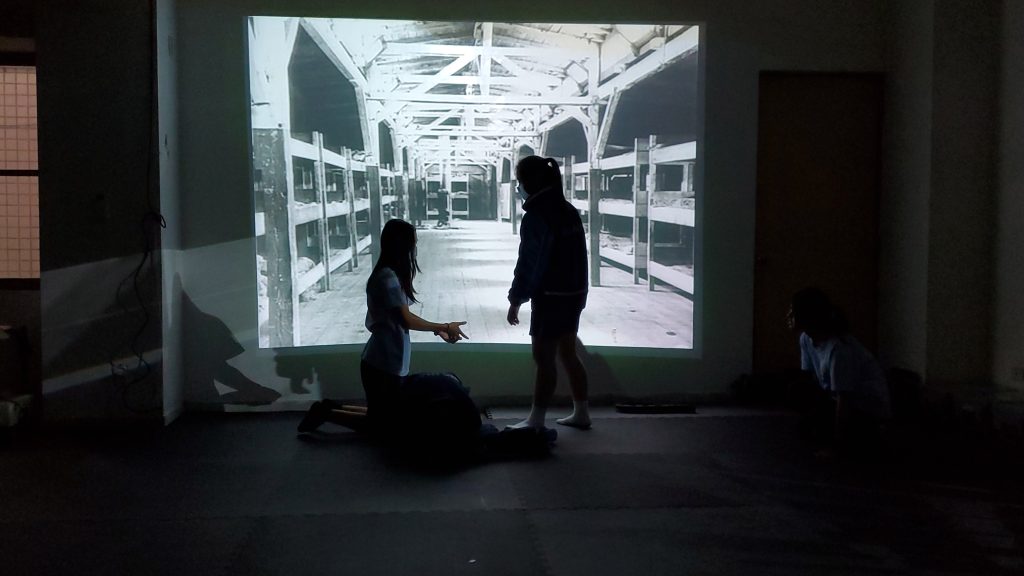
The Cross-Disciplinary Aesthetic Education course “Chagall: Born of Love” integrates theatrical performance to deepen students’ understanding of peace and justice.
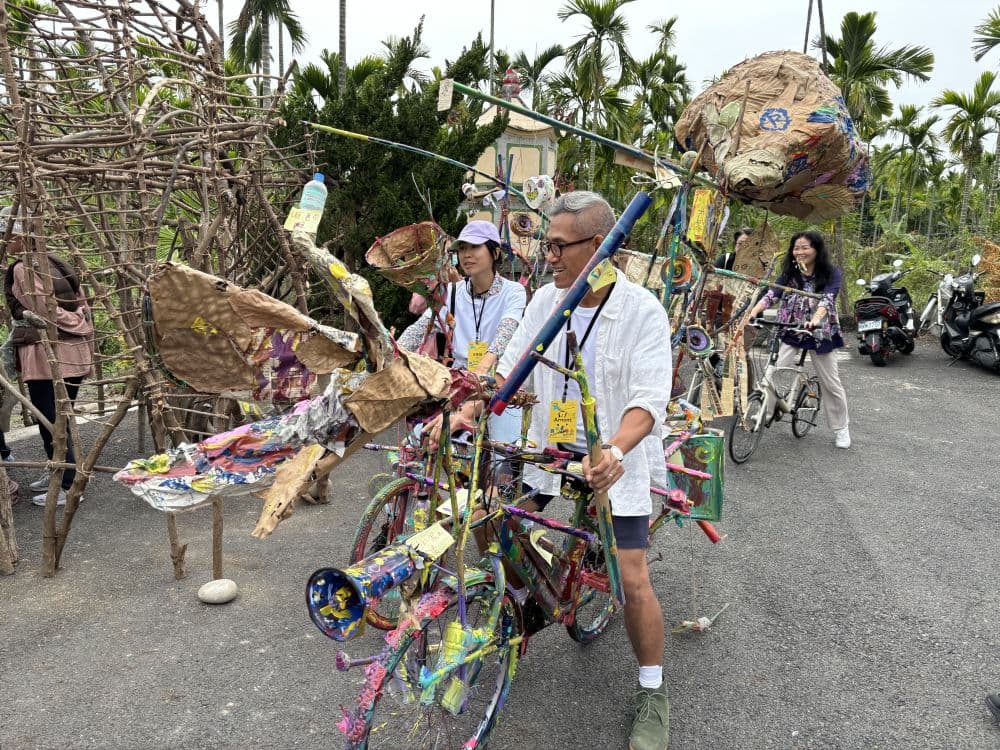
At the Land Art Festival, the activity “Playing with Nature” featured a collaborative artwork created by artist Arnont Nongyao and local children titled The Rhythmic Sound of Dacheng’s Iron Horses.
Industry–Academia Collaboration to Advance Media Literacy and Strengthen Digital Resilience
While digital technologies provide entertainment and convenience, they also amplify risks such as online fraud and misinformation. Since 2020, NTNU has partnered with the Homeplus Digital Co., Ltd. to establish the Media Literacy Education Hub, which promotes media literacy across age groups by training seed teachers and campus ambassadors, organizing film production workshops, and developing educational board games.
In October 2024, the initiative expanded internationally for the first time. The team was invited to several independent high schools and universities in Malaysia to share best practices in media literacy and lead hands-on workshops featuring their self-developed board game, which teaches students to identify credible news by evaluating images and online content.
To further promote public access to media production, the program has organized more than 30 Mobile Filmmaking Workshops over four years, covering diverse themes such as local culture, social issues, and education. The 2024 workshops, held in Taipei, Taoyuan, and Tainan, attracted nearly 100 participants and resulted in over 100 short films. Completed works are later aired on public-access cable television channels, enabling community members to see their own productions broadcast in their homes and thereby advancing true media access rights.

In the board game, players assume the role of media operators and engage in perspective-taking to understand how media organizations function, thereby enhancing their media literacy and critical thinking skills.


Through hands-on tablet activities, the Media Literacy Education Hub highlights that while digital technologies bring convenience and entertainment, they also pose risks such as online fraud and misinformation.